Is Hangzhou Worth a Day Trip from Shanghai?
The train from Shanghai Hongqiao to Hangzhou East takes about 45 minutes. That puts you in a completely different kind of city — one built around a lake instead of a harbor, quieter in pace, older in character, and genuinely distinct from anything you'll find in Shanghai.
Hangzhou was the capital of the Southern Song Dynasty in the 12th and 13th centuries, when it was one of the largest and most cultured cities in the world. That history hasn't disappeared — it's visible in the causeways crossing West Lake, in the historic quarters south of the water, in the Buddhist temples built into forested hillsides, and in the tea villages that have been cultivating the same variety for centuries.
A day trip is worth making. You won't cover everything — Hangzhou rewards a slower pace — but a planned day gives you a real sense of what makes this place different from anywhere else in China. The question isn't whether to come. It's what to prioritize with the time you have.
Hangzhou has four distinct areas worth knowing about: West Lake and its shores, the historic quarter around Hefang Street, the tea hills west of the lake, and the Grand Canal district in the north. This guide covers all four so you can decide what fits your day — and what you might come back for.
Getting from Shanghai to Hangzhou
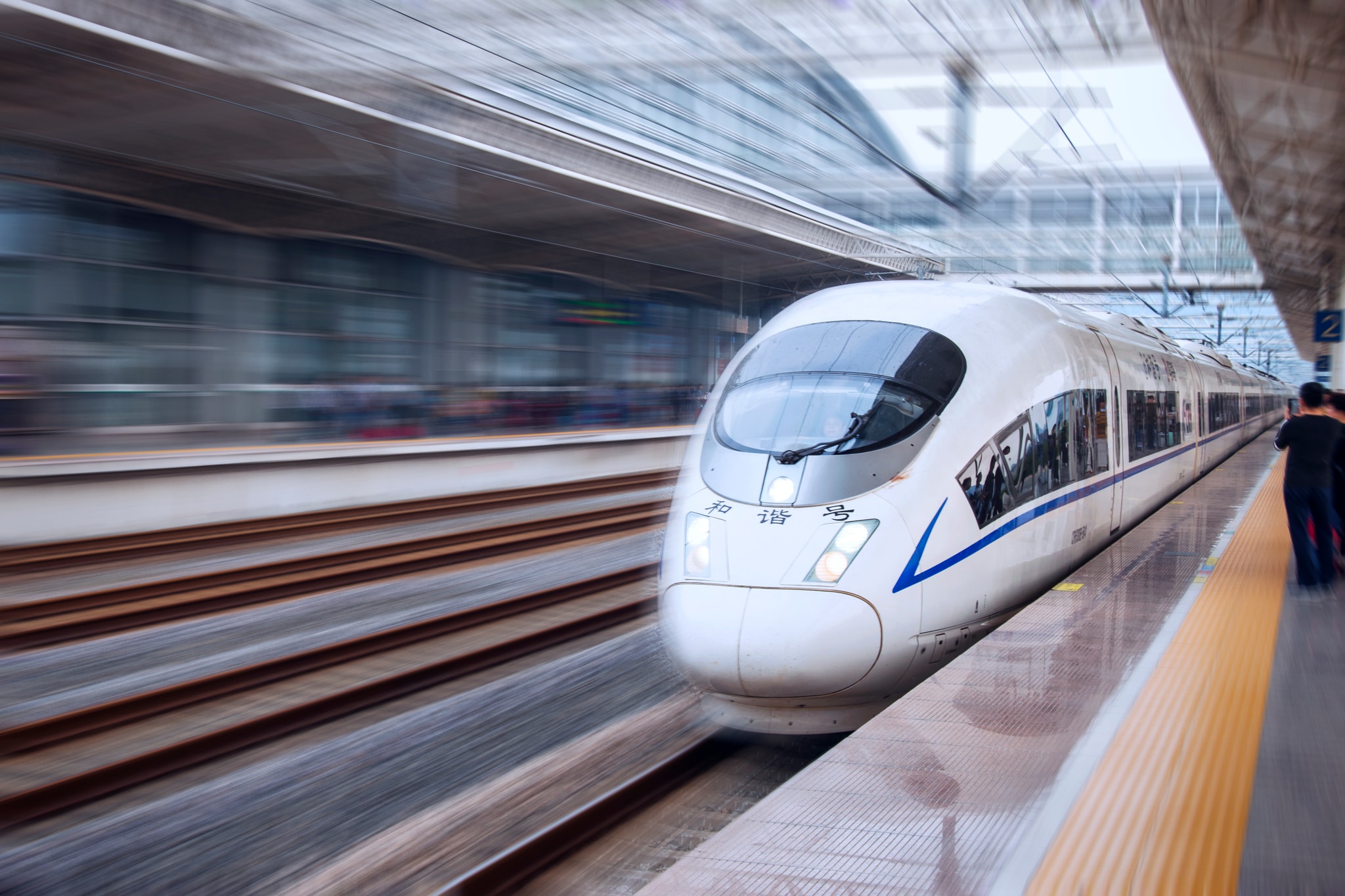
The standard route is the high-speed train from Shanghai Hongqiao Railway Station (虹桥火车站) to Hangzhou East Railway Station (杭州东站). The fastest G-class trains cover the roughly 170 km in about 45 minutes, and most services take under an hour and 15. This is one of the busiest rail corridors in China — more than 250 departures a day, running every few minutes from around 6 AM to about 10:30 PM. The last practical return from Hangzhou East leaves around 22:30–22:45, which is what makes the day trip so forgiving.
Fares (Hongqiao → Hangzhou East, G-class)
| Class | Price | Worth it? |
|---|---|---|
| Second class | ¥73–93 | The default — fine for 45 minutes |
| First class | ¥117–148 | Wider seats; rarely necessary on this ride |
| Business class | ¥219+ | Only ~8 seats per train; sells out first |
Slower D-trains run 1–1.5 hours with fares from around ¥47 — worth it only if the G-train times don't fit your plan.
Which station to use in Shanghai
Shanghai Hongqiao handles roughly 95% of the high-speed departures and is the practical answer for almost everyone. It connects to Metro Lines 2 and 10, and sits next to Hongqiao Airport — straightforward to reach from Puxi (the western side of Shanghai) without leaving the metro system. If you're based in Pudong near the international airport, factor in 40–50 minutes of metro travel to reach Hongqiao first. Shanghai Railway Station and Shanghai South also run a minority of services, mostly slower ones.
Which station in Hangzhou — the detail most guides skip
Hangzhou East (杭州东) receives the large majority of trains and has a direct metro line to West Lake, so it's the default. But a smaller number of G-trains — around 14 a day from Hongqiao — run to Hangzhou Railway Station (杭州站, known locally as City Station or 城站), which sits only about 3 km from the lake's eastern shore: a ¥15–25, 10-minute taxi or two metro stops. If one of those departures fits your morning, it's the smarter arrival. (Since late 2024 some trains also serve Hangzhou West via a longer routing — ignore those for a day trip.)
Booking
Two workable options for international travelers:
- Trip.com — English interface, accepts Visa and Mastercard, English customer support, and it auto-books the moment official sales open. It may add a small service fee depending on promotion; still the lowest-friction option.
- 12306 (the official China Railway app/site) — now has a working English version for foreign passport holders. Register with your passport before your trip: identity verification can take up to three working days. No service fees.
Tickets are released 15 days before departure (around 14:00 Beijing time). On weekdays, same-day tickets are usually fine. On weekends, book two to three days ahead. For Golden Week and other public holidays, book the moment the presale opens.
Boarding is paperless — your ticket is tied to your passport, and you scan or show the physical passport at the gates. Carry the actual document; a photo doesn't work.
Arriving at Hangzhou East
The station is one of Asia's largest rail hubs — 15 platforms and 600+ trains a day — but the flow is simple: follow the Metro signs down to the basement level for Line 1 toward West Lake. If you want to drop bags for the day, there's a staffed left-luggage desk on the departure level and yellow self-service QR lockers at arrivals; Hangzhou metro stations also have lockers (first 30 minutes free, capped at ¥12–30 per day by size).
Getting Around Hangzhou
Metro Line 1 runs from Hangzhou East directly into the West Lake area — ride toward Xianghu and get off at Longxiangqiao (龙翔桥): six stops, about 16–20 minutes on the train, ¥4. From Exit C it's a 400-metre walk west to the lakefront. Budget ~30 minutes door-to-door including the walk through the station. A taxi or DiDi covers the same ~12 km in 20–35 minutes for ¥30–45 — usually not faster than the metro, and on weekends and holidays the scenic-area roads clog while the metro doesn't.
Bikes are the best way to cover the lake once you're there. The official city system is 叮嗒 (Dīdā) — red-and-white dock bikes stationed throughout the scenic area. The first 60 minutes are free, then ¥1/hour, with a ¥5/day cap. Using them requires Alipay or WeChat Pay linked to an international card — this needs to be set up before you travel, not at the lake. If you haven't done that, private rental shops near the water charge ¥40–60/day for a standard bike, no app required.
On foot, the eastern circuit — Bai Causeway, Su Causeway, Leifeng Pagoda — is a comfortable 3–4 hour walk. The western shore along Yanggong Causeway adds another 2–3 hours.
Tourist circular bus: A red bus runs a fixed loop with stops at the main eastern landmarks. ¥30/day for unlimited rides, with bilingual (Chinese/English) guidance. A practical option if you'd rather not cycle or if you're visiting with people who prefer not to.
For getting between areas — the lake to the tea hills, or the lake to the Grand Canal district — taxis and ride-hailing apps (Didi) are the most practical choice.
West Lake: What Day Trippers Need to Know
West Lake (西湖, Xī Hú) is the reason most people make the trip from Shanghai. A 6.39 km² freshwater lake inscribed as a UNESCO World Heritage Site in 2011, it's been the cultural and aesthetic centre of Hangzhou for more than a thousand years. Entry to the scenic area is free — no gate, no ticket. Individual attractions have their own fees (Leifeng Pagoda ¥40, boat to Three Pools Mirroring the Moon ¥55–70), but most of the lake itself costs nothing.
The lake has two distinct sides that are worth understanding before you arrive.
The eastern shore is where the majority of visitors go: Bai Causeway (白堤, Bái Dī) and its willow-lined walk, the iconic Broken Bridge (断桥, Duànqiáo), Su Causeway (苏堤, Sū Dī) stretching 2.8 km across the lake, and Leifeng Pagoda (雷峰塔, Léifēng Tǎ) on the southern shore. These are genuinely significant landmarks — both causeways were built by poet-governors over nine centuries ago and are still the main ways to cross the lake on foot. The eastern circuit on a weekday morning is one of the better walks in China. On a busy weekend afternoon, expect company.
The western shore, running along Yanggong Causeway (杨公堤, Yánggōng Dī), operates at a different register entirely. Smaller gardens, inner lake channels lined with reeds, traditional water clusters like 茅家埠 (Máojiābù) and 浴鹄湾 (Yù Hú Wān) — and far fewer visitors even during peak season. The inner lake itself, accessible only by small boat, is the part of West Lake that photographs don't capture. You have to be on the water to understand it.
For a day tripper with limited time: you can cover the eastern circuit thoroughly, or you can spend the same time going deeper on the western side. Both are worth your attention. Most visitors only see one.
Our The Other Side of West Lake tour is built around the western shore — a boat ride through the inner lake's reed-lined channels, a guided walk through paths shaped by local life, and a traditional tea ceremony at a lakeside teahouse. It's designed for the day where you want to leave knowing you saw more than the standard circuit.
If you want to plan the lake visit yourself, our West Lake Hangzhou: Complete Visitor's Guide covers both shores in full.
Hefang Street and the Southern Song Imperial Quarter
About a 10-minute walk south from West Lake's eastern shore, Hefang Street (河坊街, Héfáng Jiē) is where Hangzhou's dynastic history becomes most walkable. The street dates to the Southern Song Dynasty (1127–1279), when Hangzhou served as the imperial capital and this area was a commercial hub that supplied the palace. Most of the architecture along it draws from the Ming and Qing dynasties: timber-framed buildings, carved eaves, stone-paved lanes.
Follow it south and you reach Southern Song Imperial Street (南宋御街, Nán Sòng Yù Jiē) — the ceremonial spine of the old capital, where emperors once processed and merchants built their livelihoods around the imperial calendar. It's a preserved stretch of historic urban fabric, quieter than Hefang's commercial section and less visited by tourists making the standard day trip circuit.
Along the way, Hu Qing Yu Tang (胡庆余堂) is one of China's oldest and best-preserved traditional Chinese medicine pharmacies, founded in 1874. The original building is still in use — you can walk through the dispensary and see how classical herbal medicine has been practiced here for over 150 years. It's one of those places that earns its reputation.
For food: Hefang Street has a good concentration of Hangzhou street snacks — 定胜糕 (Dìng Shèng Gāo, red bean rice cakes), scallion pancakes, dragon beard candy. For a sit-down meal, the surrounding lanes have more reliable options for Hangzhou cuisine.
Our Take a Stroll Through the Dynasties tour covers this area in full — starting at the Fangzhi Museum for an introduction to Hangzhou's dynastic history, moving through the Former Residence of Hu Xueyan (a late-imperial merchant's home), down Southern Song Imperial Street, and ending at Hu Qing Yu Tang where guests handcraft their own herbal sachet in a traditional Chinese medicine experience.
The Tea Hills: Longjing Village and Meijiawu
The hills immediately west of West Lake are where Longjing tea (龙井, Lóng Jǐng) grows. Known in English as Dragon Well, it's China's most celebrated green tea — and it's grown here and essentially nowhere else. During the Qing Dynasty, the Qianlong Emperor visited the area multiple times, walking the fields and leaving behind poems praising the land and the labor behind each leaf. Those visits transformed what was already a prized regional tea into a national institution.
The two main villages are Longjing Village (龙井村) and Meijiawu Village (梅家坞), both set in the hills about 30–40 minutes from central Hangzhou by taxi or bus. The trail connecting them runs through forested ridgelines and terraced tea fields — the terrain that gives this area its character. Walking it during picking season, with farmers working the rows and the smell of fresh tea in the air, is an experience the Longjing tea you can buy anywhere doesn't convey.
Picking season runs from late March through April. The most prized harvest is the pre-Qingming (明前, Míng Qián) picking — the first leaves of spring, collected before the Qingming Festival in early April. Outside picking season, the landscape is still worth seeing; the plantations are active year-round.
Our Where Tea Rang Through the Hills tour is built around a full day in these hills — hiking the trail from Longjing to Meijiawu, picking fresh tea leaves at a working plantation with a local farmer, then learning traditional tea frying firsthand. You taste and take home the tea you made yourself.
We've also written a full guide to the tea itself: Visiting Longjing Tea Village: Dragon Well Tea in Hangzhou.
The Grand Canal District: A Different Kind of Hangzhou
If West Lake defines the Hangzhou most visitors know, the Grand Canal district shows a different side of it. The Beijing–Hangzhou Grand Canal (京杭大运河, Jīng-Háng Dàyùnhé) — the longest canal in the world — has its southern terminus here, and for over a millennium it was the artery connecting Hangzhou to the imperial capitals of the north. Grain, silk, and power moved through it. The canal shaped the city's economy and geography in ways that are still visible.
The Qiaoxi Historic District (桥西历史街区) and Xiaohe Direct Street (小河直街) are where the canal's former trading quarters have evolved into genuine neighborhood life — canal-side streets, local markets, and architecture that has accumulated over centuries of continuous use rather than being rebuilt for visitors. It's about 20–25 minutes from West Lake by metro, and a different experience than anything around the lake.
Our The Artery of Empires tour covers the Grand Canal Museum, the Qiaoxi and Xiaohe neighborhoods, a hands-on local craft experience, and a boat ride along the canal toward Xiangji Temple (香积寺) — a Tang Dynasty Buddhist temple still active beside the water.
For the full history of the canal and what to see: The Grand Canal: China's Other Great Wonder.
Before You Go: Practical Tips
Mobile payment
Hangzhou runs on mobile payment. Cash works in many places but not everywhere — bike docks, smaller food stalls, and transit top-ups often don't accept it. Alipay and WeChat Pay both support foreign credit cards: Alipay accepts Visa, Mastercard, JCB, Diners Club, and Discover; WeChat Pay accepts Visa, Mastercard, JCB, and Diners Club — credit cards only, not debit. Both apps need to be set up before you travel, not at the point of use.
A practical note: some banks — particularly certain North American and European issuers — flag or decline transactions through Chinese payment apps. There's no reliable way to predict which ones. The recommended approach is to set up both Alipay and WeChat Pay before leaving home, test each with a small transaction, and if possible, let your bank know you'll be using them in China. When one fails at a specific vendor, the other often works.
Language
Hangzhou is significantly less English-friendly than Shanghai. Restaurant menus, local vendors, and signage at smaller metro stations will mostly be in Chinese. Google Translate's camera mode — which translates text through your phone camera in real time — is useful enough to download before you go. Download the Chinese language pack so it works offline.
Best time to visit from Shanghai
Spring (March–May) and autumn (September–November) offer the best conditions. Spring coincides with tea picking season and brings the most striking lake scenery. Summer is hot and humid. The Qingming Festival period (early April) and Golden Week (late September/early October) draw large crowds to West Lake — worth avoiding if you have flexibility.
Day trip vs. staying overnight
A day trip comfortably covers one area well — West Lake and the Hefang Street quarter together, or the tea hills as a full-day focus. To see both the lake and the Grand Canal district, or the lake and the tea hills, you need at least two days. Hangzhou has good accommodation at all price points and is straightforward to navigate once you're oriented — if your schedule allows, the overnight is worth it.
Doing Hangzhou in a day and want it guided? See the Hangzhou day tours that fit a day trip — the four- and five-and-a-half-hour routes work comfortably around the train.
Frequently Asked Questions
Explore More
Plan Your Hangzhou Trip
Small-group day tours, digital self-guides, and fact-checked planning notes for Hangzhou — all in one place.
The Other Side of West Lake
Small-group tour of the inner lake and western shore — the part of West Lake most visitors never reach.
Take a Stroll Through the Dynasties
Walk through Hangzhou's imperial history from Hefang Street to Southern Song Imperial Street, with a traditional Chinese medicine experience.
Where Tea Rang Through the Hills
A full day in Longjing tea country — hiking between villages, picking tea, and learning to fry it with a local farmer.
The Artery of Empires
The Grand Canal district: history, canal-side neighborhoods, a local craft experience, and a boat through Hangzhou's waterways.