So When Is the Best Time to Visit Hangzhou?
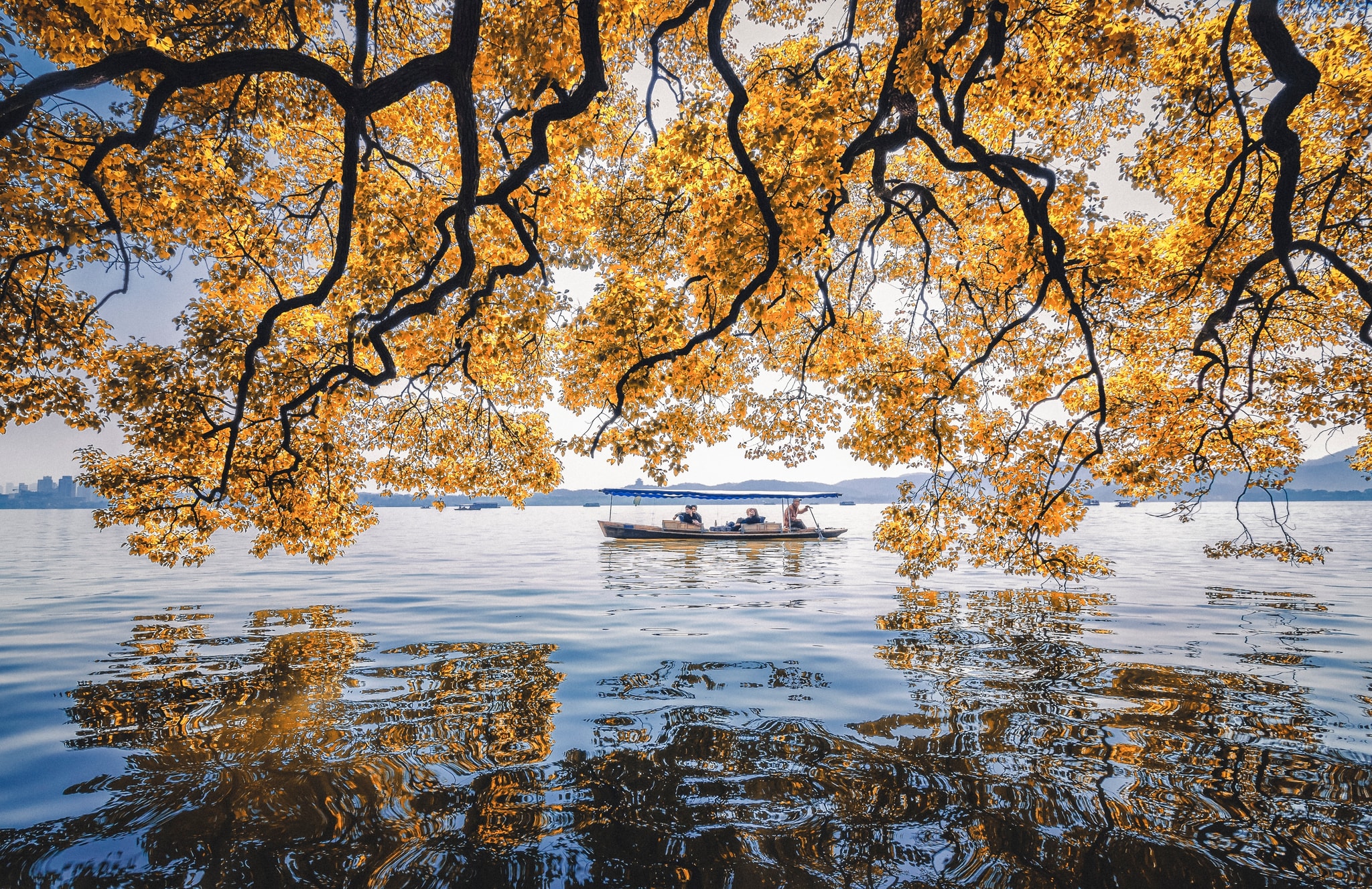
The best time to visit Hangzhou is autumn — roughly late September through early November. The summer humidity finally breaks, sweet osmanthus perfumes Hangzhou, and the light over West Lake (西湖) turns gold. Spring, from late March into May, comes a close second. That's the short answer. But Hangzhou revolves around its lake, and every season transforms it. Your best time might depend on what brings you here: tea, blossoms, lotus, or a quiet causeway in the winter cold. Here's what each season actually feels like, month by month, plus the exact dates to avoid.
Here's the short version before we get into the details:
- Autumn (mid-Sept–early Nov) — the best season. Dry, clear, comfortable, and the one time of year when Hangzhou smells of osmanthus. October is the single best month.
- Spring (late March–May) — a close second. Blossoms line the lake causeways, and the year's first Longjing tea arrives, though the rain picks up.
- Summer (June–Aug) — for the lotus, if you can take the heat. West Lake's lotus blooms are spectacular; the humidity is not.
- Winter (Dec–Feb) — quiet, cheap, and underrated. Expect the fewest crowds of the year, plum blossoms, and — if you're lucky — snow on the lake.
Two hard rules, whatever you choose: avoid the national holiday weeks (dates below), and start early. West Lake before 8am is a calmer, entirely different place from West Lake at noon.
Autumn: Hangzhou at Its Best
If someone from Hangzhou tells you to come in October, this is why.
By early autumn, the wet summer heat has broken. October is the driest month of the year and one of the mildest, with daytime highs around 24°C (75°F), clear skies, and cool evenings. It's the weather Hangzhou was made for.
Then there's the scent. Osmanthus (桂花, guìhuā) is a tiny, unremarkable-looking flower, but for a couple of weeks, its sweet, warm, apricot-like fragrance fills entire neighbourhoods. It's Hangzhou's signature autumn experience, and locals treat it as an event: they sit beneath the trees with osmanthus tea and buy osmanthus cakes from street stalls. The most famous place to experience it is Manjuelong Village (满觉陇). This hillside, home to thousands of trees, lends its name to a West Lake scene: "Sweet Osmanthus Rain at Manjuelong" (满陇桂雨). One honest caveat: the exact peak depends on the weather. The flowers need the average temperature to drop below about 25°C before they open, so a warm autumn can push the bloom into late October, and there are often two rounds. Aim for the second half of September through October, then check the current-year timing as your trip approaches.
Autumn also brings one of China's great natural spectacles: the Qiantang River tidal bore (钱塘江大潮). The largest tidal bore on Earth, it is a wall of water that surges upstream against the current, loud enough to hear before you see it. It runs year-round on the lunar cycle but peaks around the Mid-Autumn Festival. In 2026, the strongest window is roughly September 25–30. The classic viewing spot is Yanguan (盐官), in Haining (海宁), about an hour from Hangzhou, where the "one-line bore" comes straight at the embankment. Times shift by about twenty minutes a day with the wind and water level, so check the local Yanguan notices the day before instead of trusting a fixed schedule.
Through late October and November, the maples and ginkgoes turn, and West Lake is at its most photogenic. If you want the fullest version of Hangzhou — good weather, osmanthus, the tide, and autumn colour — this is the window. Pair it with our 3, 5, or 7-day Hangzhou itinerary to plan your days.
Spring: Lake Blossoms and the Year's First Tea
Spring is the other season locals will tell you to come, and it arrives quickly. By late March, the lake causeways are in bloom. Bai Causeway (白堤) alternates peach trees with willows — pink against fresh green — while the long Su Causeway (苏堤) stretches beyond it. For the biggest display, head to Prince Bay Park (太子湾公园), Hangzhou's showcase for cherry blossoms and tulips, at its best in the second half of March. Go early; locals know these places well, too.
Spring is also tea season. If you drink green tea, that's a compelling reason to time your trip carefully. The hills just west of West Lake are where Longjing (龙井, "Dragon Well") — China's most famous green tea — is grown. The prized first pick is called Mingqian (明前), meaning "before Qingming": the smallest, most tender buds, hand-picked before the Qingming festival, which in 2026 falls around April 4–5. Walk through the terraced fields around Longjing Village (龙井村) and Meijiawu (梅家坞) while the picking is underway, and you'll smell fresh leaves as farmers work the rows — an experience the tea in a shop can't convey. Our full Longjing tea guide covers the villages, while our tea-country tour follows the trail with a local farmer during the harvest.
The trade-off is changeable, increasingly wet weather, with rain building through April and May. Pack a light layer and an umbrella, and you'll be fine. This remains one of the loveliest times to be in Hangzhou.
Summer: Come for the Lotus, Prepare for the Heat
Summer in Hangzhou is a genuine trade-off, and both sides are worth explaining honestly.
The reason to come is the lotus (荷花, héhuā). From roughly early July into August, whole stretches of West Lake fill with blooms: broad green pads and pink flowers rising above the water. The classic spot is Quyuan Fenghe (曲院风荷), "Breeze-Ruffled Lotus at the Quyuan Garden," another of West Lake's celebrated scenes. See it as locals do, at 6–8am, when the flowers are freshest, the light is soft, and the paths are largely yours before the day heats up.
And it will heat up. July and August are hot and humid, with daytime highs of 33–34°C (92–93°F), sometimes topping 38°C, and sticky nights. Then there's the rain. The plum-rain season (梅雨, méiyǔ) runs from about mid-June to early July, bringing weeks of grey, saturated air; June is the wettest month of the year. (The name comes from its timing with the ripening of the plums.) Summer needn't be unpleasant if you plan around those conditions — spend mornings outside and afternoons indoors or on the water — but if your dates are flexible, this is the season to skip. If early summer is your only window, late May and June are still green and lovely. Just expect the plum rains toward the end.
Winter: Quieter, Cheaper, and Too Easily Dismissed
Most guides write winter off. They're wrong.
December through February is the quietest and cheapest time to be in Hangzhou. Tour groups are gone, hotel rates drop, and you can walk the eastern shore of West Lake with room to breathe. It's cold but rarely harsh, with daytime temperatures of roughly 0–12°C (32–54°F) and weather that feels damp more than frigid.
Winter has its own flower, too. Plum blossoms (梅花, méihuā) bloom in the cold from late January through February, peaking in February. Hangzhou has a scene devoted to them: Lingfeng (灵峰), whose "Exploring Plum Blossoms at Lingfeng" (灵峰探梅) is the most famous, plus Gushan (孤山, Solitary Hill). Then there's the sight every photographer hopes to catch: "Melting Snow at Broken Bridge" (断桥残雪), one of the classic Ten Scenes of West Lake. When snow falls on the arched Broken Bridge (断桥), it melts faster on the raised centre than at the shaded edges. From a distance, the white line appears to "break" — hence the name. The catch is that real snow is occasional in Hangzhou, not an annual event, so treat it as a lucky bonus rather than a reason to book. If you value quiet and low prices more than guaranteed sunshine, winter is a wonderful time to come.
Hangzhou Weather, Month by Month
Use this quick reference for Hangzhou weather by month. It shows the average daytime high and nighttime low, plus a one-line verdict:
| Month | High / Low | In a word |
|---|---|---|
| January | 9°C / 1°C (48°F / 34°F) | Cold, damp, empty — plum blossoms begin |
| February | 11°C / 3°C (52°F / 37°F) | Still cold; peak plum blossoms |
| March | 16°C / 7°C (60°F / 44°F) | Warming fast; blossoms open |
| April | 22°C / 12°C (72°F / 54°F) | Prime spring; tea harvest; some rain |
| May | 27°C / 17°C (81°F / 63°F) | Warm and green; humidity rising |
| June | 29°C / 21°C (85°F / 70°F) | Wettest month — plum rains |
| July | 34°C / 25°C (93°F / 77°F) | Hot and humid; lotus in bloom |
| August | 33°C / 25°C (92°F / 77°F) | The hottest, stickiest stretch |
| September | 29°C / 21°C (84°F / 69°F) | Easing heat; autumn begins late in the month |
| October | 24°C / 15°C (75°F / 59°F) | The best month — dry, clear, osmanthus |
| November | 18°C / 9°C (64°F / 48°F) | Crisp and dry; autumn foliage |
| December | 11°C / 3°C (52°F / 37°F) | Cold and quiet; lowest prices |
Dates to Avoid: Hangzhou's 2026 Crowd Calendar
Whatever season you pick, the biggest factor in your experience isn't the weather. It's the domestic holiday calendar. During a national holiday, West Lake's causeways are shoulder-to-shoulder, and every attraction, train, and hotel is booked out. Here are China's 2026 public holidays:
- Spring Festival (春节): February 15–23 — the year's biggest travel crush. Avoid.
- Qingming (清明): April 4–6
- Labour Day / May Day (劳动节): May 1–5 — very busy. Avoid.
- Dragon Boat (端午节): June 19–21
- Mid-Autumn (中秋节): September 25–27 — overlaps the tidal-bore peak, so expect crowds at Yanguan
- National Day / Golden Week (国庆节): October 1–7 — the worst week to visit already-popular Hangzhou. Avoid.
The three holidays to plan around most carefully are Spring Festival, May Day, and National Day. In 2026, Mid-Autumn (Sept 25–27) and National Day (Oct 1–7) are separate breaks with normal workdays between them. That makes the last few days of September a particularly good window: peak autumn weather before the Golden Week wave.
Even outside the holidays, weekends draw heavy local crowds. A weekday at West Lake is noticeably calmer. On any day, the hours before 8am and in the late afternoon are the quietest and most beautiful.
Our Local Verdict: The Time We'd Choose
If you asked us directly when to visit Hangzhou, we'd say autumn — and, if you can, October, timed to catch the osmanthus and dodge the Oct 1–7 Golden Week. No other season gives you more of what makes Hangzhou special in one trip: the weather, the scent, the tide, and the colour.
Spring into early summer is our other favourite window. You'll see blossoms along the causeways, the first tea of the year, and West Lake turning green, as long as you make peace with the odd rainy day. We'd save summer for lotus lovers willing to rise at dawn. We genuinely recommend winter to anyone who would trade a little cold for a quieter, emptier, and cheaper West Lake. Each season suits a different kind of trip.
Plan Your Hangzhou Trip
Once you've chosen your window, the next question is how to spend your days. Our complete Hangzhou itineraries map out 3, 5, and 7-day plans, and our West Lake guide covers the lakeshore in full. Planning a wider China trip? Read our companion guide on the best time to visit China.
If you'd rather have a local handle the planning and show you the tea hills, the quiet western shore, or the historic quarters, that's exactly what we do. Browse our small-group Hangzhou tours and self-guides, choose the way you want to travel, and let us shape the days around the season that's right for you.
Frequently Asked Questions
Explore More
Plan Your Hangzhou Trip
Small-group day tours, digital self-guides, and fact-checked planning notes for Hangzhou — all in one place.
Where Tea Rang Through the Hills
A full day in Longjing tea country — hiking between villages, picking tea, and frying it with a local farmer.
The Best Time to Visit China
The country-wide companion guide: month-by-month across China's regions, with 2026 holiday dates.
West Lake Hangzhou: Complete Visitor's Guide
Both shores of West Lake in full — what to see, and the best way to walk it.